
Exploring the Background and Significance of the 1987 North American Wildlife Stamps

Exploring the Background and Significance of the 1987 North American Wildlife Stamps
We always say that to understand something, we have to start with its original cause and background. This sounds old-fashioned, but in the field of historical and cultural protection, it has a simple sense of truth. Just like an old building is not just a pile of bricks and tiles, it hides the customs, human feelings, and the breath of craftsmen. What about stamps? Although they are very small, they are a mirror of that era, reflecting the preferences, aesthetics, and certain values of society. For this reason, I can't help but want to trace the origins of the 1987 set of North American wildlife stamps.
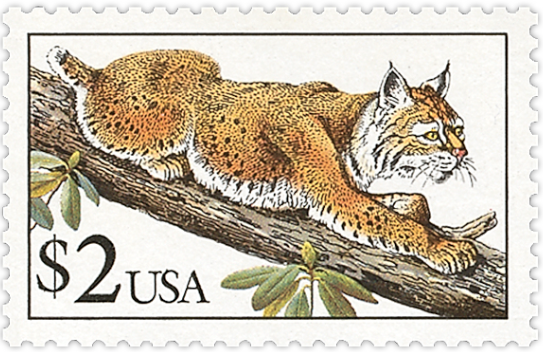
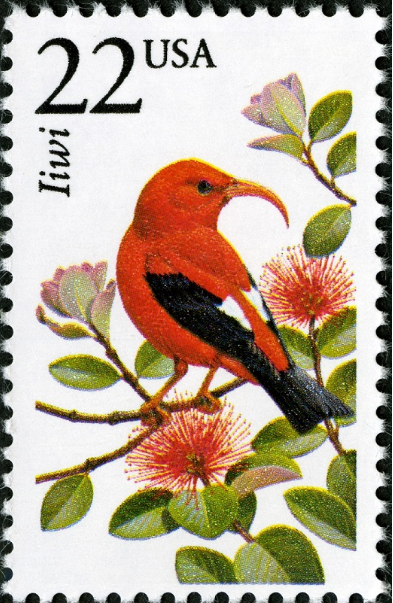
That year, Canada held the CAPEX philatelic exhibition - to be honest, I could even imagine the bustling scene in the exhibition hall. The United States Postal Service (USPS) suddenly launched a whole set of stamps themed on North American wildlife, which immediately caused a sensation in the philatelic circle. A total of 50 pieces, all works by artist Chuck Ripper. He is not the kind of painter who pursues superficial liveliness. His painting style is delicate and dynamic. The animals he depicts, such as the mountain lions that flit quietly through the forest or the brightly colored Hawaiian whirlwinds (Iiwi) that rest on the branches, all exude a kind of...how to put it? It's like watching real, breathing characters, like they really walked from the edge of the forest to your envelope. This is not just an image, but a "natural theater".
In fact, the evolution of stamp themes is also quite interesting, like a bystander who silently records the direction of society. At first, it was all presidents and big figures, solemn and dignified. But later, the content gradually "spread out", and landscapes, famous paintings, various festivals and concepts also came up. Just three years before this set of wildlife stamps came out, a less well-known but I think particularly critical study quietly appeared - Stephen Kellert and the Humane Society conducted a survey on "Americans' attitudes and knowledge about animals." More than 3,000 people, covering 49 states except Hawaii, the results are frowning: the average correct rate of answers is 52.8%. In other words, more than half of the people do not have enough basic knowledge about animals, and even have misunderstandings.
I certainly can’t say that this research directly gave rise to the stamp design, but it did provide a footnote to the cultural climate at the time. This shows that people began to be a little “alert” and began to realize that the topic of wildlife is not just a column in National Geographic magazine, but may be in the blind spot of our daily lives. At this time, a set of incredibly beautiful stamps quietly appeared. Isn’t it a clever “introduction”? Like a key, it gently pushes open people’s curiosity.
Of course, the initial idea was not entirely smooth sailing. The U.S. Postal Service and the Citizens Stamp Advisory Committee (CSAC) originally wanted to launch a series of "50 state animals", which sounds quite systematic, right? But reality slapped them in the face: many states do not have an official "state animal" at all, and some have the same state animal. So they changed their thinking and simply selected representative species from birds, mammals, amphibians and even invertebrates, across the entire North American continent, for a "big party".
However, it is interesting that not all animals on stamps are popular. For example, mountain lions, Alaskan brown bears, and coyotes are top predators. You can say they are domineering, but some people think they are "dangerous." In 1982, the New York Times directly called coyotes "a plague for farmers"; in 1986, in order to protect the number of mountain lions, the United States even temporarily suspended hunting licenses. These animals have actually been "demonized" for a long time. So, the appearance of this set of stamps is not just to show cute animal illustrations, it is also to justify these somewhat "controversial" animals, trying to tell us: they have their place in the ecological chain and their significance in existence.
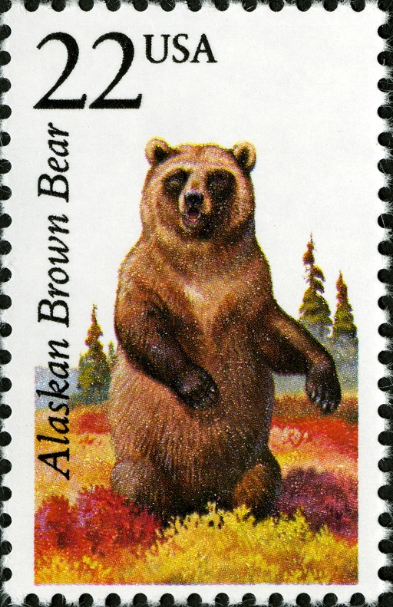
Chuck Ripper's artistic approach - to be honest, it's really "warm". He is not the kind of painter who relies on showing off his skills. He paints not only animals, but also the interaction between animals and nature. He adds a background to each picture: mountains, forests, flowers, and water, as if telling us that no life should be viewed in isolation, they are an inseparable part of the ecosystem. Moreover, his works themselves do not only appear on stamps, his name can be seen in museums and scientific journals. It is not an exaggeration to say that this set of stamps in 1987 is one of the highlights of his artistic career.
In the final analysis, do these stamps really raise public awareness of environmental protection? Perhaps no one can quantify it. But its cultural impact is real. It is like a small but emotional documentary, using fingernail-sized images to tell the stories of life that once ran, flew, and crawled on the land of North America. They are people's retrospective view of nature at that time, and they have become a mirror for us to rethink the relationship between "man and nature" today.
Perhaps, the next time you take out this set of stamps, you will suddenly think: It turns out that these silent little pictures once quietly spoke for nature.