

Many people, when first encountering stamps, instinctively think they’re only worth the face value. But for historical stamps issued by the USPS, face value is merely the “starting point.” What truly determines whether they can grow from a few cents to thousands, tens of thousands, or even millions of dollars is the combined effect of multiple factors, including condition, rarity, historical context, and market demand.
In other words, collecting USPS stamps is not simply about “buying and storing,” but a process that combines historical aesthetics, research and judgment, and market observation. Below, let’s break it down step by step to scientifically assess the true value of USPS historical stamps and avoid common pitfalls for beginners.
I. What is the “market value” of USPS historical stamps?
Market value is the price someone is willing to pay for a stamp in a real transaction—not the asking price on a platform.
The four core dimensions that influence the market value of stamps:
| Evaluation Dimensions | Measurement indicators | Value influence direction | For example, |
| Condition (P) | The perforations are intact, the pattern is centered, there are no creases or yellow spots, and the adhesive is in good condition. | Determine the lower limit of value | Mint Never Hinged (MNH) grade often commands a significant premium. |
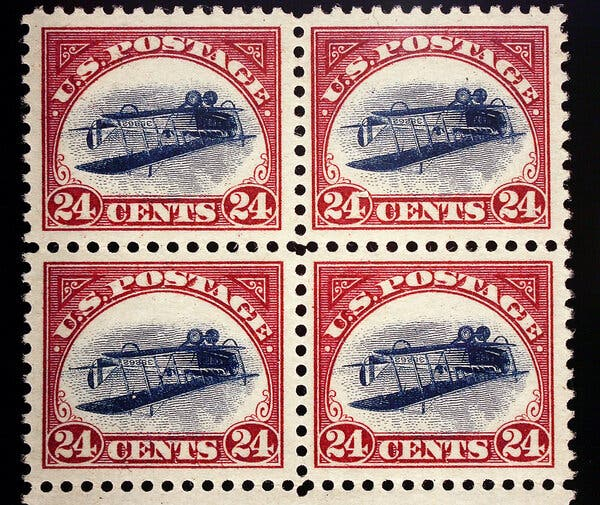
| R – Rarity | Issue quantity, surviving quantity, whether it is an error edition/trial print | Determine the upper limit of value | The 1918 “Inverted Jenny” misprint |
| H. Historical Significance | The political and cultural narratives behind the theme | Enhance the premium for long-term collection | Apollo Moon Landing Commemorative Stamps |
| D. Market Demand | Collector community attention and transaction activity | Determines short-term price fluctuations | Stamps featuring modern designers are gaining popularity among young collectors. |
In short:
Guaranteed condition, maximum rarity, historical significance, and demand dictate the pace.
II. Core Tools and Professional Standards for Valuation
To assess the value of USPS stamps, relying on intuition or “I think this is old” is not enough.
You need tools, data, and standards.
① Establish value benchmarks using authoritative directories
The Scott Catalog is
the world’s most authoritative standard for stamp prices and numbering, but catalog prices are generally higher than actual transaction prices. Use it to determine “basic positioning.”
Linn’s Stamp News
focuses on market trends, collecting hotspots, and recent auction changes to help determine where to focus your collecting efforts.
② Determine the price range based on condition grade (APS grading reference)
| grade | describe | Market price impact |
| Gem (Excellent/Near Perfect) | Centered, vibrant color, perfect perforations, MNH | It can exceed the list price by several times. |
| Very Fine | Centered is good, looks good, and minor flaws are acceptable. | Mainstream transaction level |
| Fine (General) | Centered, normal, slight creases or glue peeling | Below the list price |
To be honest:
90% of the value of a stamp lies in its condition, not its rarity.
③ Determine the “actual transaction price” through real-time transaction data.
On eBay, Sold Listings
Show the actual selling price, not the listed price.
Records from reputable auction houses (Siegel/Sotheby’s)
are used as a reference for premiums on high-value or rare stamps.
III. Three things that beginners often misunderstand (but you won’t)
| Common Misconceptions | Actual situation | A more reasonable strategy |
| “The older it is, the more valuable it becomes.” | Age does not equal value; rarity determines price. | First check the number issued and the number still in existence. |
| “Official face value = market value” | Postal pricing only considers functionality, not collectability. | Focus on historical significance and postmarks |
| “Forever Stamps appreciate in value.” | The Forever Stamp is an inflation hedge. | Regularly stockpiling for shipping is fine, but collecting for appreciation is another matter. |
A reminder:
Don’t hoard stamps; study them.
IV. Practical Collection and Purchase Advice
1. Record before buying.
Before buying, check the Scott number → year of release → number of copies issued → whether there are any misprints.
2. The source of trust is more important than price.
New mail → USPS official or authorized retail
Historical stamps → APS certified resellers or reputable auction platforms
3. High-value stamps must be authenticated.
Value ≥ $1000 → Seek a Philatelic Foundation (PF) certificate of authenticity.
The certificate is a guarantee of value and your entry point for appreciation.
Conclusion
Evaluating USPS historical stamps is not some kind of mystical art, nor is it “playing the system based on gut feeling or luck.”
As long as you:
Establish catalog benchmarks
Understanding the leverage of condition and rarity
Refer to actual transaction data
Maintain long-term aesthetic and cultural interests
Your collection is not just about “collecting stamps,” but about participating in the rediscovery of historical value.
If you wish to delve deeper into the “cultural world of stamps“:
Check out our latest stock of USPS stamps now!
In-depth understanding: The design stories behind USPS stamps
enhance their value: How to enhance collectible potential through special postmarks and first-day covers.