What does “Non-Machineable” mean on a stamp? A Complete Guide to Butterfly Stamps

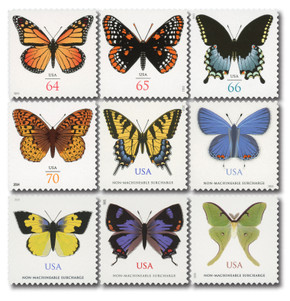
.”While browsing stamp catalogs, you may notice a special type of stamp: they are usually printed with beautiful butterfly designs, have a face value slightly higher than ordinary Forever Stamps, and bear a mysterious line of small print: “Non-Machineable Surcharge” .
What does this mean? Does it mean that regular stamps are for machines, while these stamps are for… butterflies?
Of course not. This line is actually warning you: not all mail can pass through USPS’s high-speed sorting machines.
“non-machineable”If you’re sending wedding invitations, wax-sealed greeting cards, or square envelopes, understanding the concept of “Non-Machineable” is crucial. This not only prevents your mail from being torn by machines but also from being returned.
What is “non-machineable”?
To understand this concept, we need to first look at what happens to a letter at the post office.
Once you drop your letter into the mailbox, it will be sent to the processing center and into high-speed sorting machines. These machines, like an assembly line, send tens of thousands of letters flying, bending, and scanning between rollers and belts per hour.
“Uncheckable” refers to any mail that cannot be safely passed through these machines.
If a problematic email is forcibly sent to the machine, two things may happen:
Machine jamming: causing sorting delays.
torn,Damaged letter: The envelope is torn and the contents inside are damaged (this is the worst-case scenario).
Therefore, USPS requires that these types of letters be sorted out by hand by staff. This manual service is more expensive, which is why a “surcharge” is required.
What characteristics would make a letter “undetectable by machine”?
Your letter is considered non-machineable and requires special postage if it meets any of the following criteria:
1. Oddly shaped (especially square)
The machine determines the direction of the letter by its aspect ratio.
Rule: If the ratio of the length to the width of the envelope is less than 1.3 or greater than 2.5, it is not machine-inspectable.
Common traps: Square envelopes (e.g., 5×5 or 6×6 inches). Because they are the same length and width, machines cannot handle them, and they must be sorted manually.
2. Uneven surface (Lumpy or Rigid)
The machine requires letters to have a certain degree of flexibility so that they can bend between the rollers.
Common traps:
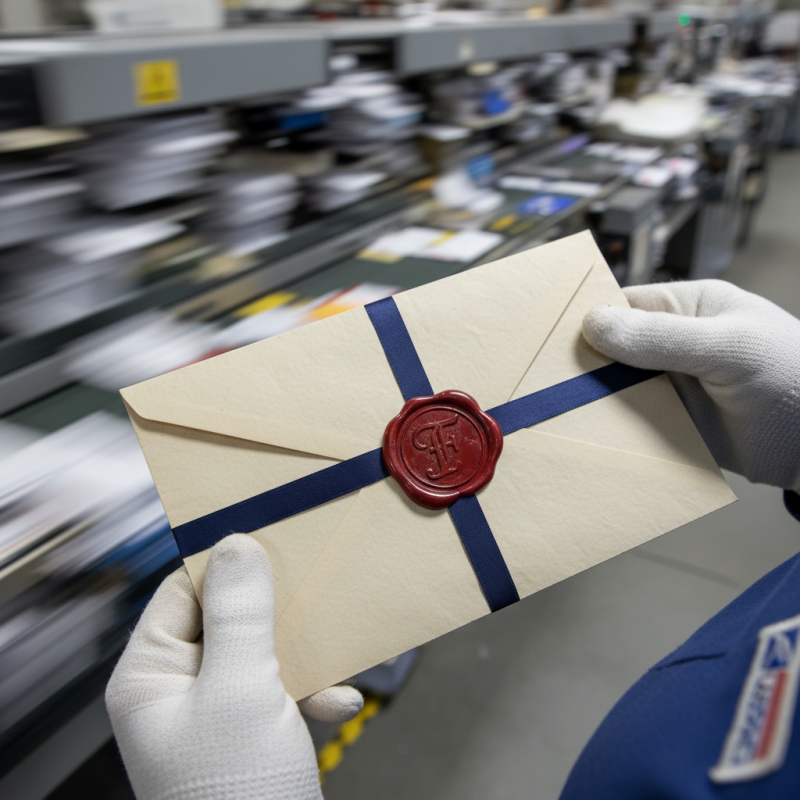
Wax seals: especially wax seals placed on the outside of envelopes.
Ribbon knot/button: Any protruding hard object.
Hard cards/USB drives/keys: If the envelope contains something that cannot be bent at all.
3. Incorrect sealing direction
If the envelope is vertically oriented (opens vertically), or if the seal is not completely sealed, it may not be able to pass through the machine.
The function of the Butterfly Stamp
To make it easier for users to pay this extra manual processing fee, USPS has introduced a dedicated Non-Machineable Surcharge Stamp.
Iconic design: Almost always a butterfly (such as the California dogface butterfly or the Colorado hairy-faced butterfly). The presence of a butterfly usually indicates that it is a non-machine-inspected stamp.
Face value: Its value is equal to [1 oz standard postage] + [non-machine inspection surcharge].
As of 2024/2025, its face value will be approximately $1.12 (subject to rate fluctuations).
In comparison, a regular Forever Stamp costs approximately $0.73.
The entire cost is included by affixing just one butterfly stamp; no other stamps are required.
Can I use regular Forever Stamps instead?
Yes, but they need to be used in combination.
If you don’t have the butterfly stamps, you can pay for them by combining them with regular Forever Stamps.
Formula: Total amount you need to pay = $1.12.
Combination scheme:
Option A: Apply 1 Forever Stamp ($0.73) + 1 Additional Ounce Stamp ($0.24) + there’s still a gap… (quite troublesome).
Option B: Directly attach 2 regular Forever Stamps ($0.73 x 2 = $1.46).
Although it’s a premium of around $0.30, this is usually the simplest solution, especially if you’re buying discounted stamps.
Should I buy butterfly stamps or affix two regular stamps?
This depends on your needs and budget:
If you’re looking for perfect aesthetics, buy a special butterfly stamp. Using only one will look neater, and the butterfly design itself is perfect for a wedding or nature-themed occasion.
If you are looking to save money (Smart Savings):
Purchase regular Forever Stamps (such as flowers or flags) at a discount in the [Sale Discount Stamp] section.
Just stick on 2.
Cost breakdown: If you buy the Forever Stamp at a 50% discount (about $0.36 per stamp), the cost of sticking on two stamps is only $0.72.
In contrast, a full-price butterfly stamp costs $1.12.
Conclusion: Using two discounted stamps is actually $0.40 cheaper per envelope than buying one special stamp!
Conclusion
“Non-machineable” may sound like a complicated technical term, but it’s actually a safety net protecting your precious letters.
The next time you’re ready to send out that beautiful square wedding invitation or a thank-you card with a vintage wax seal, remember: don’t let it go into the machine.
You can choose to buy the full-price butterfly stamps at the post office, or you can choose a smarter way—pay with our collection of either beautiful or practical discounted stamps, protecting both your letters and your wallet.
[ Browse discounted Forever Stamps (Floral & Heart Collection) for perfect combinations. ]